Bordure de paysage en métal
Bordure de paysage en acier inoxydable en gros
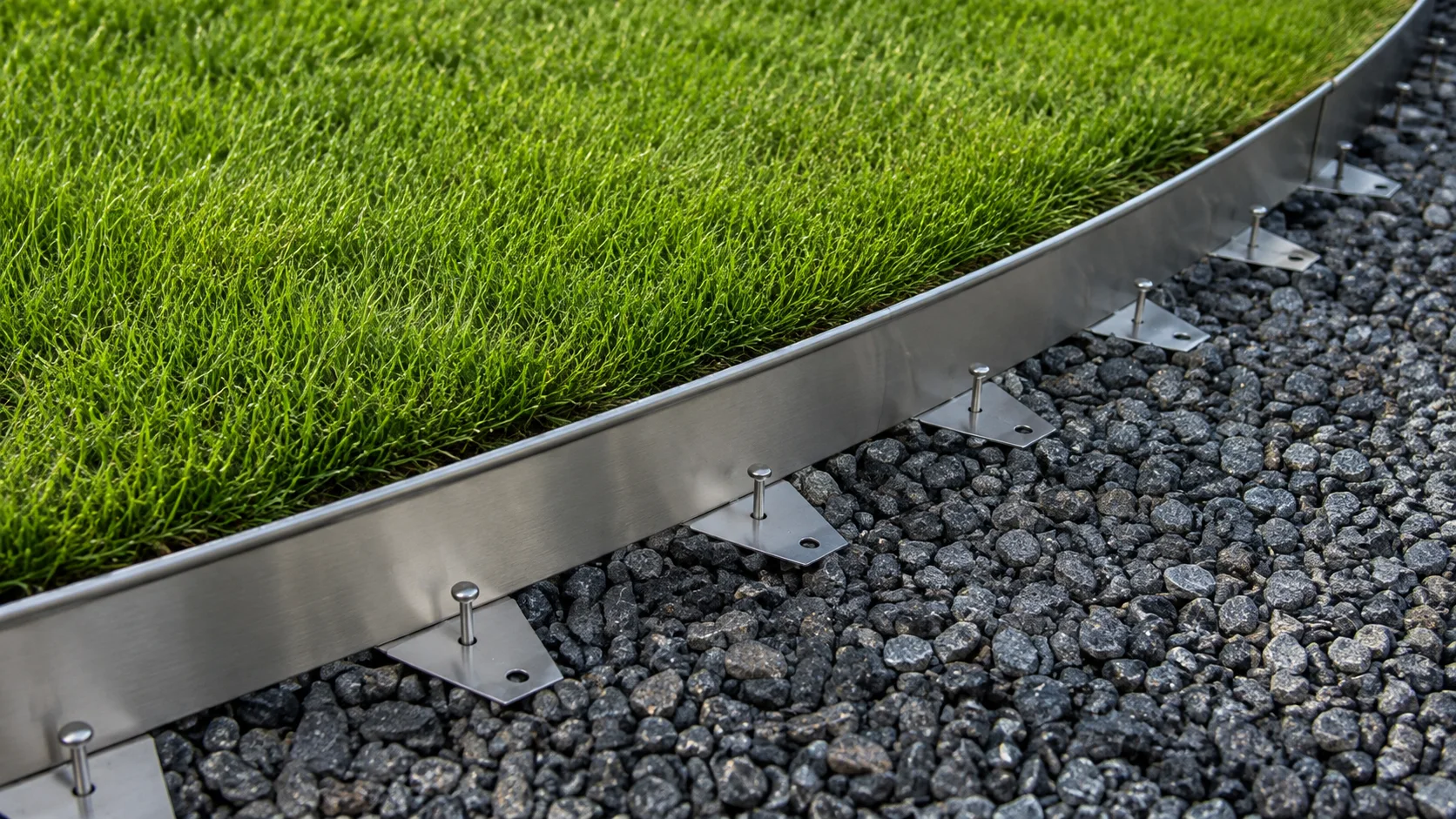
Les bordures paysagères en acier inoxydable créent une limite propre et durable entre les pelouses, le gravier, les plates-bandes, les sentiers et les fosses d'arbres. Les sections d'un mètre utilisent une barrière verticale avec un bord supérieur plié et des pattes d'ancrage horizontales perforées pour la fixation mécanique. EcoYardSupply prend en charge les demandes de projets et de vente en gros dans les configurations vérifiées 201 et 304 en acier inoxydable dans les hauteurs 50 / 80 / 100 mm, avec une largeur de base 50 mm, Jauge 0.5 mm et finitions sélectionnées.
Applications typiques
- Séparation pelouse-gravier et pelouse-lit planté
- Cernes d’arbres et bordures paysagères incurvées
- Parcs, communautés résidentielles et verdissement des espaces publics
- Allées de jardin, bordures pavées et confinement en pierre décorative
- Projets d'aménagement paysager commerciaux nécessitant une finition métallique mince
Plage de configuration vérifiée
| Qualités de matériaux | 201 acier inoxydable / 304 acier inoxydable |
|---|---|
| Longueur de section | 1 m |
| Hauteur verticale | 50 mm / 80 mm / 100 mm (5 cm / 8 cm / 10 cm) |
| Largeur de base horizontale | 50 mm (5 cm) |
| Jauge nominale | 0.5 mm |
| Emballage | 20 pcs / pack pour les trois profils |
| Poids du paquet | 7.8 kg (50 mm H) / 9.7 kg (80 mm H) / 12 kg (100 mm H) |
| Options de finition | Finition en acier inoxydable naturel ; configurations sélectionnées à finition noire présentées dans la gamme examinée |
| Conception du socle | Languettes d'ancrage triangulaires répétées avec trous de fixation pré-percés |
| Fixations | Les vis/broches correspondantes sont répertoriées avec les configurations examinées ; confirmer le type et le nombre lors de la demande de prix |
| MOQ et délai de livraison | Coté par qualité, profil, finition, quantité commandée, exigences d'emballage et destination |
Note de configuration : les trois profils standards partagent une longueur 1 m, une largeur de base 50 mm et un écartement 0.5 mm ; les options de hauteur sont 50 mm, 80 mm et 100 mm. Confirmez la qualité, la finition et l'emballage avant l'approbation de l'échantillon ou de l'ensemble.
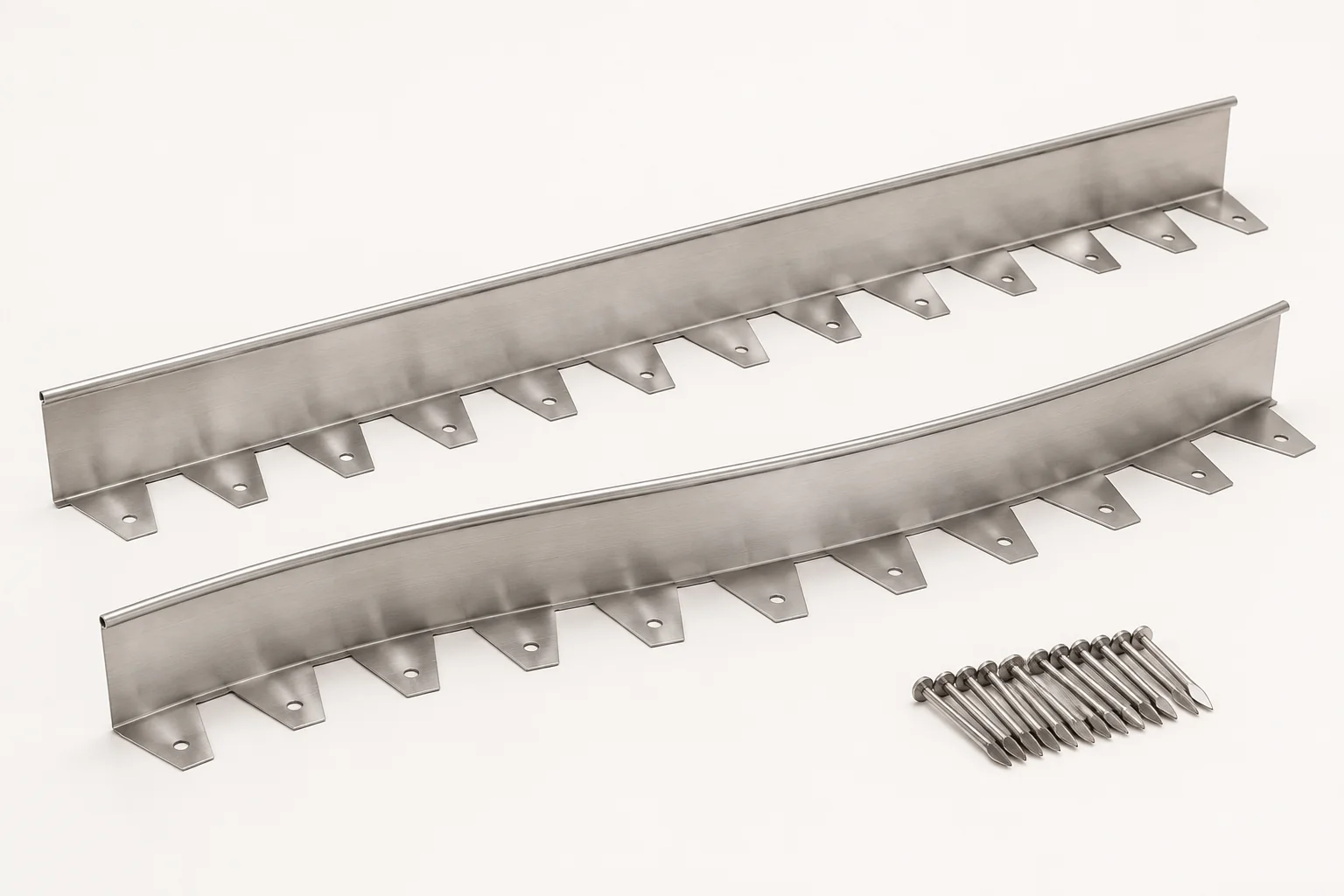
Sections de bordure représentatives droites et courbes ; le matériel final suit le devis approuvé.
Choisir le bon profil de bordure métallique
La sélection du profil doit commencer par l'environnement d'exposition, la hauteur visible requise, le mouvement du sol attendu, le rayon de courbe et le substrat. Les trois profils standard utilisent une base 50 mm et une jauge 0.5 mm ; choisir entre les hauteurs 50 mm, 80 mm et 100 mm modifie la séparation visible et le poids du paquet sans modifier l'empreinte au sol.
201 versus 304 acier inoxydable
| Facteur de sélection | 201 acier inoxydable | 304 acier inoxydable |
|---|---|---|
| Poste d'approvisionnement | Option à coûts maîtrisés pour les projets dont les conditions d’exposition ont été revues | Option privilégiée lorsqu'une résistance à la corrosion extérieure plus large est requise |
| Meilleure pratique | Confirmer le climat, l’irrigation, le sel de déglaçage et les conditions d’entretien avant approbation | Évaluez toujours les chlorures, l’exposition côtière, les produits chimiques et l’humidité stagnante |
| Documentation de l'acheteur | Préciser la qualité sur le bon de commande et demander une confirmation du matériel | Spécifiez explicitement 304 ; ne vous fiez pas uniquement à l’apparence pour vérifier la note |
La qualité inoxydable ne représente qu’une partie de la performance. Le drainage, la chimie du sol, le contact avec des métaux différents, la contamination des surfaces lors des pratiques d'installation et d'entretien peuvent tous affecter le résultat de l'installation. Pour les sites très salins, côtiers ou chimiquement agressifs, demandez à l’ingénieur de projet de confirmer l’alliage et la finition requis.
Hauteur, largeur de base et gabarit
- 50 mm hauteur (5 cm) : séparation visuelle à profil bas pour les bordures pavées, les pelouses et les surfaces décoratives ; 20 pcs/paquet, env. 7.8 kg / paquet.
- 80 mm hauteur (8 cm) : séparation à mi-hauteur pour bordures végétalisées et bords de chemin ; 20 pcs/paquet, env. 9.7 kg / paquet.
- 100 mm hauteur (10 cm) : séparation visible plus profonde là où la conception nécessite plus de confinement ; il ne s'agit pas d'un mur de soutènement structurel ; 20 pcs/paquet, env. 12 kg / paquet.
- 50 mm base (5 cm) : empreinte partagée sur les trois profils pour une zone de fixation cohérente.
- Jauge 0.5 mm : épaisseur de tôle partagée pour un formage progressif et un poids unitaire contrôlé sur toute la gamme.
Applications paysagères commerciales
La face mince en acier inoxydable convient aux détails du paysage où les acheteurs souhaitent une finition plus architecturale qu'une bobine en plastique. Les programmes courants comprennent les parcs, les développements résidentiels, les terrains d'hôtels, les places publiques, l'approvisionnement en projets de jardinerie et les forfaits de fosses d'arbres ou de sentiers dirigés par des entrepreneurs.
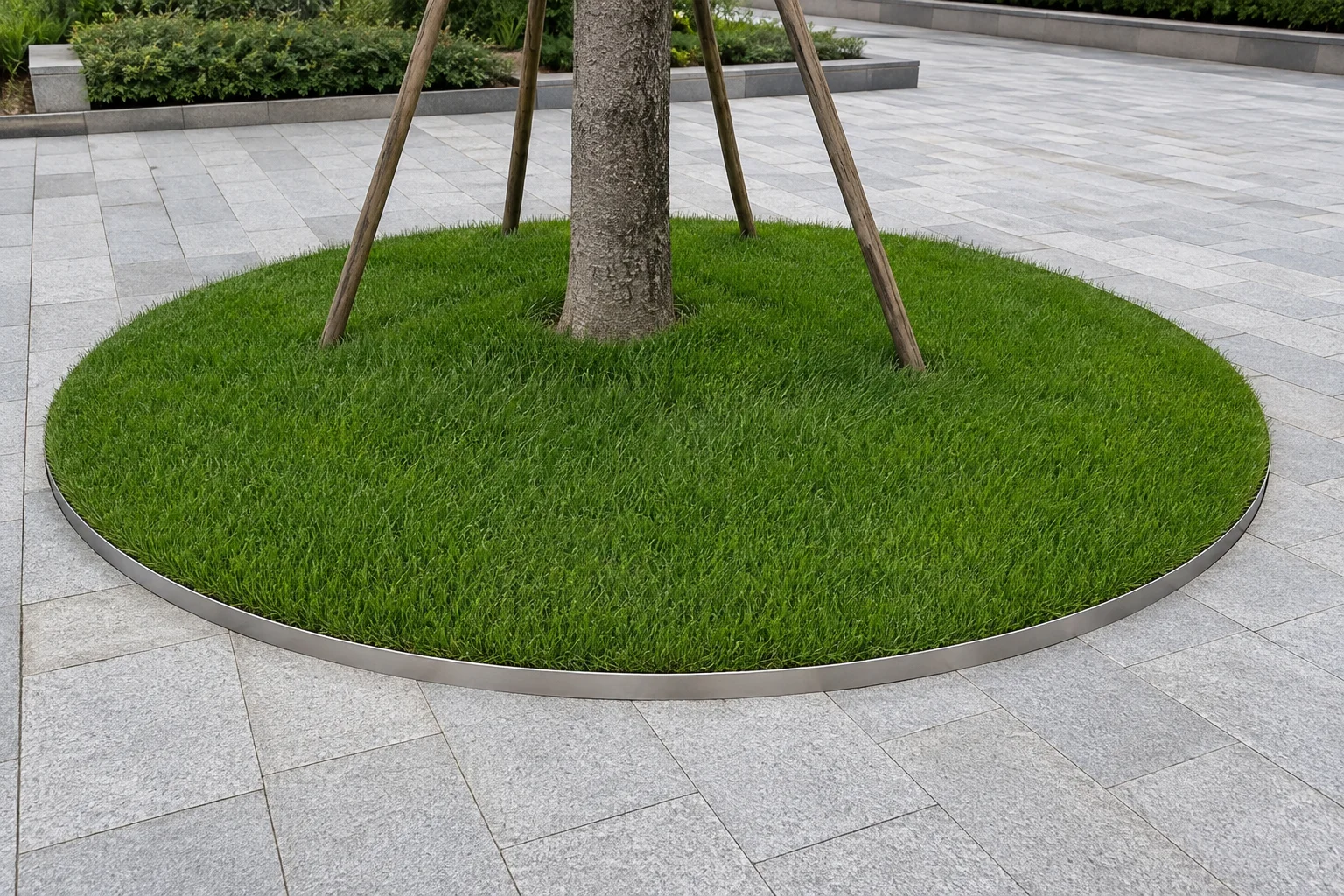
Une application de cernes d'arbre finie avec le système d'ancrage dissimulé sous la surface environnante.
Fourniture de gros et de projets
EcoYardSupply prépare des demandes de bordures en acier inoxydable autour d'une configuration approuvée plutôt que d'un prix unitaire générique. La qualité, la hauteur verticale, la largeur de la base, le calibre, la finition et le matériel de fixation modifient considérablement le produit et le plan d'emballage. Partagez la quantité du projet en mètres linéaires ainsi que le nombre de sections d'un mètre afin que le devis puisse tenir compte des joints, des coupes, des courbes et des allocations raisonnables du site.
Pour les distributeurs et les acheteurs de projets, les discussions sur les programmes disponibles peuvent inclure la sélection de profils, les options de finition noire, les kits de fixation, les cartons neutres ou de marque privée, la protection des palettes et la coordination des exportations de produits mixtes. Les dimensions ou finitions personnalisées nécessitent un examen de faisabilité et un échantillon approuvé ; ils ne sont pas issus de la plage standard.
Incluez dans votre demande de prix : la qualité de l'acier inoxydable, le profil de la section, le calibre, la finition, le nombre total de mètres linéaires, l'application prévue, le rayon de courbure le cas échéant, le substrat de fixation, les exigences d'emballage, le port de destination et la fenêtre de livraison demandée.
Envoyez un e-mail à sales@ecoyardsupply.com ou utilisez le formulaire de demande de vente en gros. Le MOQ, les échantillons, le calendrier de production et les Incoterms seront confirmés sur le devis du projet.
Planification de l'installation
- Confirmez les détails du site. Marquez la ligne finie et vérifiez les niveaux, le drainage, l'irrigation, les câbles, les services publics et les racines visibles avant toute excavation ou fixation.
- Préparez le substrat. Retirez les matériaux détachés et créez une zone de fixation stable et de niveau, adaptée aux broches ou vis spécifiées.
- Formez des courbes progressives en toute sécurité. Utilisez des outils de formage appropriés et des gants de protection. Le rayon réalisable dépend de la qualité, du gabarit, de la hauteur et de la largeur de base sélectionnés ; ne forcez pas une courbe serrée sans une méthode approuvée.
- Définissez la hauteur finie. Gardez la ligne supérieure cohérente et évitez toute projection inutile là où les roues, les outils d'entretien ou la circulation piétonnière pourraient heurter le bord.
- Ancrez les languettes. Fixez à travers les trous pré-percés à l'aide de la quincaillerie appropriée au sol ou au substrat. Ajoutez des points de fixation près des joints et changez de direction selon les détails du projet.
- Finir et inspecter. Alignez les extrémités des sections, protégez les bords coupés exposés comme spécifié, restaurez la surface adjacente et inspectez la ligne après un tassement ou des intempéries.
Note de sécurité : les bords et les extrémités coupées de la tôle peuvent être coupants. L'installation doit être effectuée avec des gants, des lunettes de protection et des outils adaptés à l'acier inoxydable. Les ingénieurs du site ou les installateurs qualifiés doivent déterminer la méthode d'ancrage pour les zones publiques, pavées, en pente ou à fort trafic.
FAQ — bordure paysagère en acier inoxydable
Q : Quelles qualités d'acier inoxydable sont disponibles ?
A : Les gammes examinées incluent l'acier inoxydable 201 et 304. Confirmez la qualité, la finition de surface et l'environnement d'exposition sur le devis et le bon de commande.
Q : Quelles tailles de profil puis-je demander ?
A : Les options vérifiées utilisent des sections d'un mètre avec une largeur de base 50 mm, des hauteurs 50 / 80 / 100 mm et un écartement 0.5 mm. Chaque profil contient 20 pièces par carton ; les poids approximatifs du paquet sont 7.8 kg, 9.7 kg et 12 kg. La disponibilité de la qualité et de la finition doit être confirmée lors de la demande de prix.
Q : La bordure peut-elle former des courbes et des cernes d'arbre ?
R : Oui, des configurations adaptées peuvent former des courbes progressives. Les rayons serrés nécessitent un échantillon ou un essai de formage car la rigidité change en fonction de la nuance, du calibre et des dimensions du profil.
Q : Les vis de fixation sont-elles incluses ?
R : Les configurations examinées répertorient les vis correspondantes. Confirmez le type de matériel, la quantité et la compatibilité avec votre sol ou substrat dans la nomenclature approuvée.
Q : Une finition noire est-elle disponible ?
A : Les configurations noires sélectionnées apparaissent dans la plage examinée. Indiquez la couleur, la qualité d'acier inoxydable, le profil et la quantité requis afin que la disponibilité de la finition puisse être vérifiée.
Q : Le produit est-il un mur de soutènement ou une barrière anti-racines certifiée ?
R : Aucune allégation universelle en matière de structure ou de barrière contre les racines n'est faite. La bordure sépare les matériaux du paysage et peut interrompre une croissance superficielle, mais les charges de retenue et les racines agressives nécessitent un système d'ingénierie spécifique au projet.
Q : L'acier inoxydable nécessite-t-il un entretien ?
A : Inspectez périodiquement les joints, l’alignement, les fixations, le drainage et la contamination de la surface. L'intervalle d'entretien requis dépend du climat, de la chimie du sol, des sels, de l'irrigation et de l'utilisation du site.
Q : Quels sont le MOQ et le délai de livraison ?
R : Ils dépendent de la qualité, du profil, de la finition, de la quantité, de la personnalisation et de l'emballage. Envoyez la configuration complète et la destination pour un devis spécifique au projet.
Q : Puis-je commander un échantillon ?
A : Demandez le grade et le profil exacts que vous envisagez d'approuver. La disponibilité des échantillons, le coût et le fret sont confirmés lors de l'enquête.
Comparez les matériaux de bordure avant de commander
Pour des critères de sélection plus larges, lisez le guide des bordures paysagères en plastique ou en métal et notre guide d'achat de bordures paysagères en gros. Vous pouvez également comparer ce produit avec le kit de bordure paysagère flexible en PE sans creuser.
Contact grossiste
Envoyez votre qualité d'acier inoxydable, votre hauteur, votre largeur de base, votre calibre, votre finition, votre quantité en mètres linéaires et votre destination à sales@ecoyardsupply.com. Notre équipe confirmera la configuration disponible, l'itinéraire d'échantillon, le MOQ, l'emballage et le délai de livraison.