
Independent support and bed connections
Do not assume that a thin metal bed wall can carry the main trellis load. Assess ground anchoring independently from any auxiliary connection to the bed.
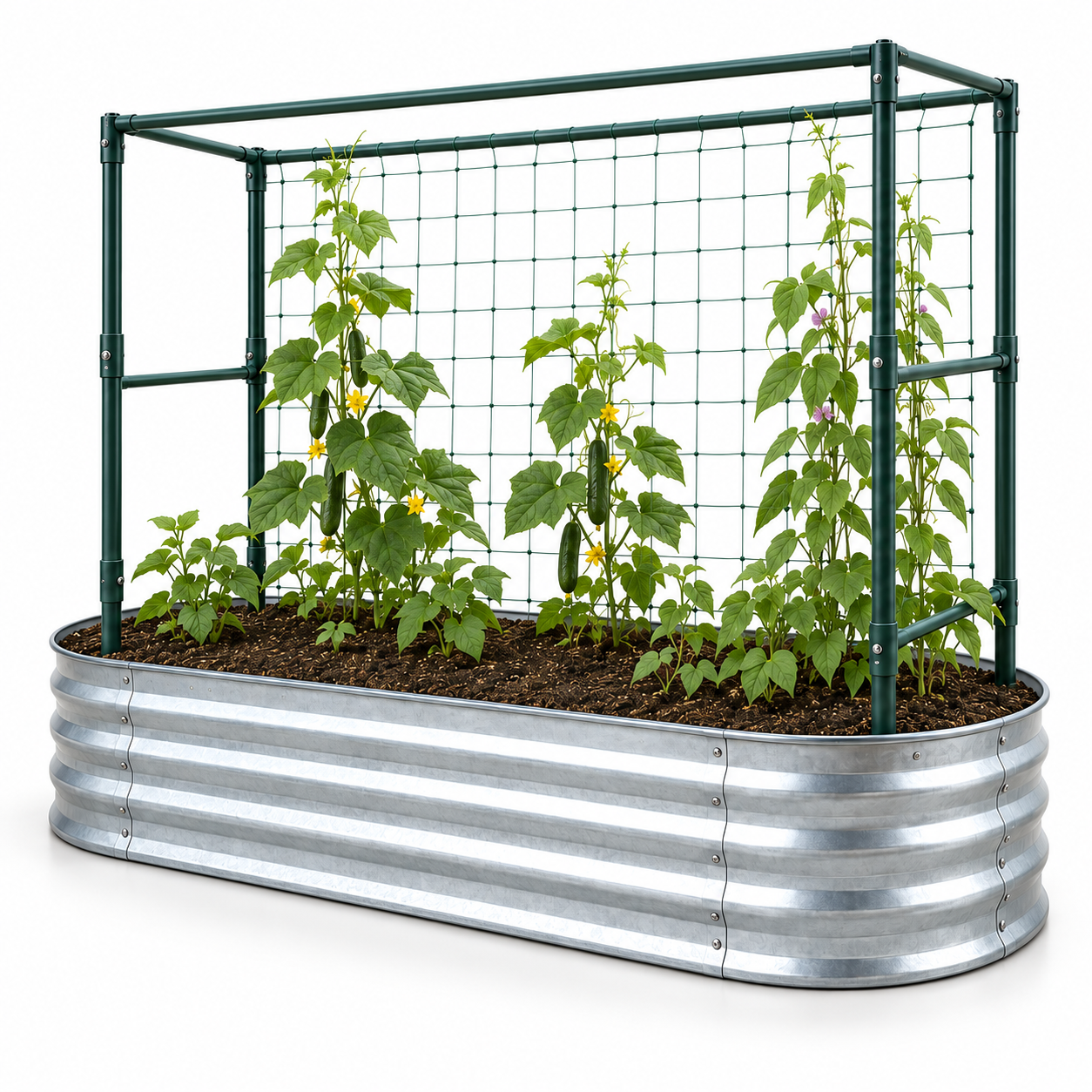 PLANT SUPPORTS & TRELLISES
Concept illustration. Final specifications and fitment are subject to confirmation.
PLANT SUPPORTS & TRELLISES
A trellis accessory for raised-bed product ranges.
A raised-bed trellis accessory concept with sectional framing and climbing netting for cucumber, climbing bean and similar crop applications. For garden importers, wholesalers, horticultural suppliers, distributors and raised-bed brands evaluating a complementary accessory range.
WHOLESALE & OEM PROJECT ENQUIRIES
Trellis accessory only. The raised bed shown is not included by default. Final configuration and commercial terms are confirmed after requirements review.
Fitment needs to be reviewed. The 120 × 60 cm measurement is a reference bed footprint, not a confirmed trellis dimension. Compare the bed outline, curved ends, rim profile and mounting conditions before approving a sample.
THE DETAILS THAT MATTER
An accessory range built around climbing crops and raised-bed product lines. Crop layout, access and the support arrangement should be considered together when evaluating a configuration.
Provide a framework and netting direction for cucumber, climbing bean and similar vines. Review the crop variety, training approach and mature plant weight for the proposed support.
Evaluate a separately sold trellis accessory or discuss combined supply with a specified bed. Confirm which items belong in each order and retail or wholesale pack.
Use the sectional design direction to review season-end dismantling, storage and bulk packaging. Agree the joints, parts list and packed arrangement before making handling or freight assumptions.
BUYER QUESTIONS, PRACTICAL CHECKS
Review the load path and installation surface before choosing fixing components. Independent ground support and auxiliary bed connections are separate design decisions.
Do not assume that a thin metal bed wall can carry the main trellis load. Assess ground anchoring independently from any auxiliary connection to the bed.
Soil depth, ground condition, mature plant weight and wind exposure inform the support review. Soil and paved installations should not automatically use the same fixing arrangement.
Use the approved structure, fittings and installation instructions for the final configuration. Ask how connectors and netting are identified for any future replacement enquiry; supply terms require confirmation.
This is a product-selection overview, not an installation manual. No load capacity, wind rating or universal anchoring method is specified.
DEFINE BEFORE YOU ORDER
Separate the reference bed dimensions from the trellis design. Matching length and width labels alone does not establish compatibility.
| Product type | Knock-down trellis accessory for raised beds |
|---|---|
| Intended applications | Climbing crops in raised-bed growing, including cucumber and climbing bean applications |
| Proposed configuration | Sectional frame with climbing netting; connectors and fixing components to be defined in the approved configuration |
| Reference bed footprint | 120 × 60 cm oval bed — a bed reference, not confirmed trellis dimensions |
| Reference bed heights | 28 cm / 43 cm in the referenced bed range; compatibility with each height requires review |
| Compatibility | Review of bed geometry, rim profile, soil depth and mounting conditions |
| Supply scope | Trellis accessory. Any bed supply must be specified separately |
The current oval galvanized raised-bed range lists a 120 × 60 cm footprint with 28 cm and 43 cm height options. These are bed dimensions. They do not define the trellis size or establish fitment at either height.
Compare the complete bed outline with the intended support positions, including clearance around the curved ends.
Provide rim photographs or drawings and the bed construction details so any auxiliary connection can be reviewed.
Review both the bed height and available soil depth. A configuration assessed for one height should not be assumed suitable for another.
Identify the proposed fixing locations and whether the bed sits on soil, paving or another surface. These conditions guide the support assessment.
BEFORE YOU SOURCE
Direct answers on intended use, bed fitment and procurement review.
It provides an upward support space for climbing crops grown in raised beds. This accessory project focuses on cucumber, climbing bean and similar applications, with the crop and support arrangement reviewed for each configuration.
Fitment needs to be reviewed. The 120 × 60 cm measurement is a reference bed footprint, not a confirmed trellis dimension. Compare the bed outline, curved ends, rim profile and mounting conditions before approving a sample.
Compatibility with both bed heights has not been verified. The referenced bed range offers these two heights; each needs a review of soil depth, support positions and mounting geometry before a shared configuration can be confirmed.
The securing method depends on the confirmed structure and site. Assess independent ground anchoring separately from any auxiliary bed connection, and do not assume the thin bed wall can carry the main trellis load. Follow the final approved fittings and installation instructions.
Cucumber and climbing bean applications are the main directions for review. Check the variety, mature plant weight and training arrangement for the proposed configuration. Suitability for every variety or for heavy-fruiting crops is not established.
Seasonal dismantling is a design objective of the sectional frame. The final joints, parts list and storage arrangement will be established during configuration and sample review; a packed size or repeated-assembly performance is not yet specified.
The product is a trellis accessory. The bed shown in the concept illustration is not included by default. State whether the enquiry is for the accessory alone or for a separately specified combined supply programme.
Provide the target market, expected order quantity, bed dimensions and height, rim photos or drawings, installation surface, intended crops, accessory-only or combined supply needs, and branding or packaging requirements. Feasibility, MOQ, pricing and lead time are confirmed after review.
For garden importers and wholesalers, raised-bed brands and distributors, and horticultural supply companies evaluating B2B manufacturing and bulk accessory supply.
Share the intended bed and application so configuration and packaging feasibility can be reviewed. OEM scope, MOQ, pricing and lead time are confirmed after the requirements review.